
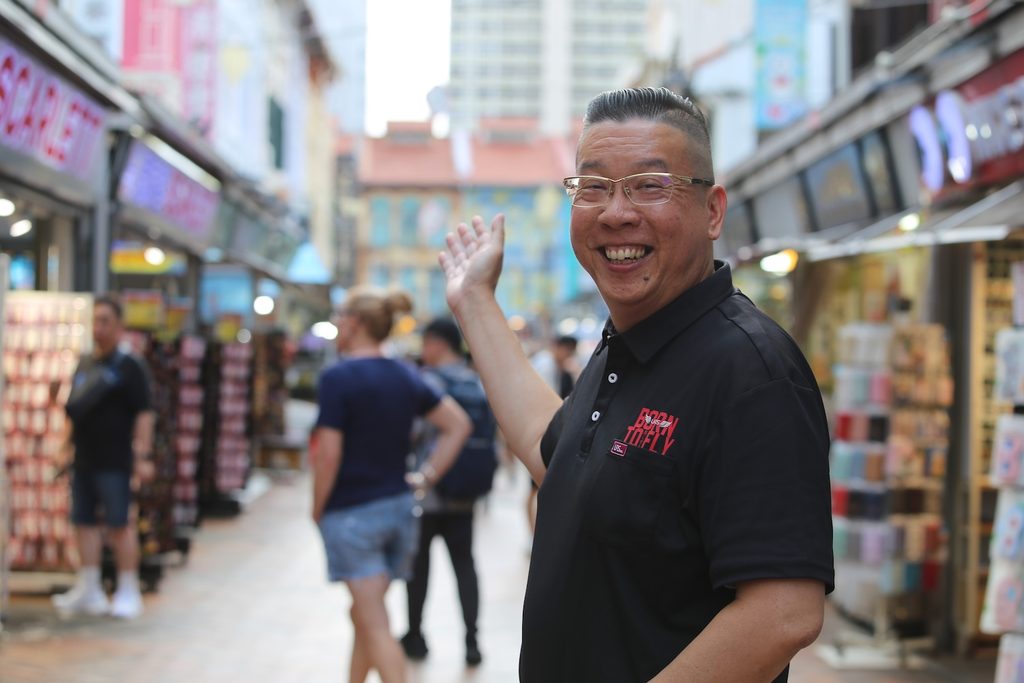
Yap Yih Fong Frederick
Men Division
It was 1987 when I met a Singaporean senior while on campus in Canada. We got to know each other while queuing for the public phone booth to call home. He befriended me and became my guide in this foreign land. One day, he asked me if I believed in the law of cause and effect and invited me to attend a Buddhist meeting.
Back then, it was rare to hear of Westerners practising Buddhism. It was an amazing sight to see them chanting Nam-myoho-renge-kyo and practising Nichiren Buddhism. My first actual proof of faith came when I found suitable accommodation soon after.
Forging My Faith in the United States
Later, I went to the United States for further studies. On September 11, 1988, I enshrined my Gohonzon. It was in the U.S. that I truly forged the foundation in faith. I lived in a small town about three and a half hours’ drive from San Francisco, where a Soka Centre was located.
I remember attending morning gongyo session at the centre, which started at 7.30am every Sunday. Since I could drive, I would meet other Young Men Division (YMD) comrades at a petrol station and give everyone a ride down to San Francisco. We would start driving at about 3am in the morning to make it in time for the morning gongyo session.
After gongyo, the youth would split up for brass band, kotekitai or gymnastics practice. After lunch, we would make the three-and-a-half-hour journey back home.
It may have seemed tough and tiring, but we felt immense joy from our Buddhist practice. Each of us was facing our own challenges, yet we encouraged one another to overcome them through faith. We always returned home feeling revitalised.
There was a Japanese YMD senior who left a deep impression on me. Even though he was in the US for just a year, he made a serious effort to learn English and was deeply committed to the Buddhist practice. When we received news that Ikeda Sensei would be visiting the US in 1993, he was determined to form a brass band to welcome Sensei, as he was a Fuji brass band member himself in Japan.
He invited me to help rally former brass band members across the US – a group that had since disbanded. Together, we visited them one by one, no matter how far or remote their homes were. Watching him clean the storeroom, create the banner alone, and remain undeterred, I learned the spirit of mentor and disciple and the standalone spirit of the disciple. I gladly joined him in his efforts.
By late 1992, the brass band was finally formed. I even joined them in the SGI-USA Festival that October, playing the bass drum – despite not knowing how to read a music score. We were all exhilarated to be able to welcome Sensei and strove hard in our practices.
However, I had to return home before we could welcome Sensei to US as my mother was diagnosed with lung cancer. SGI-USA leaders encouraged me to write to Ikeda Sensei. I received a reply from my mentor, urging me to continue striving and to become a great leader for kosen-rufu upon my return to Singapore.
Homecoming and its Struggles
For seven years after returning home, I had to practise faith in secrecy due to my father’s opposition to my Buddhist practice. Nevertheless, I never once thought of giving up. I reminded myself of the lessons learnt from the Ikegami brothers, disciples of Nichiren Daishonin – the importance of maintaining steadfast faith in the face of adversity.
At the time, I was working at my father’s company and found it difficult to find opportunities to chant. I would hide in the toilet to chant and recite my morning gongyo. As my father had factories in both Singapore and Johor Bahru, I had to travel daily between the two countries and would often be late for Soka activities in Singapore.
Still, I remember how warmly the leaders encouraged me. They assured me that what mattered most was I continued to challenge myself to attend activities, no matter the circumstances. Their warm encouragement enabled me to persevere.
Initially my mother was diagnosed with only six months to live, but through my prayers and her perseverance, she lived for another three and a half years. After marrying my kosen-rufu partner, we bought our own home. I could finally enshrine the Gohonzon in my house and practise freely!
Another series of challenges began when my wife experienced one miscarriage after another. After three miscarriages, we summoned forth even greater determination to chant for a child who would fulfil his or her mission for kosen-rufu.
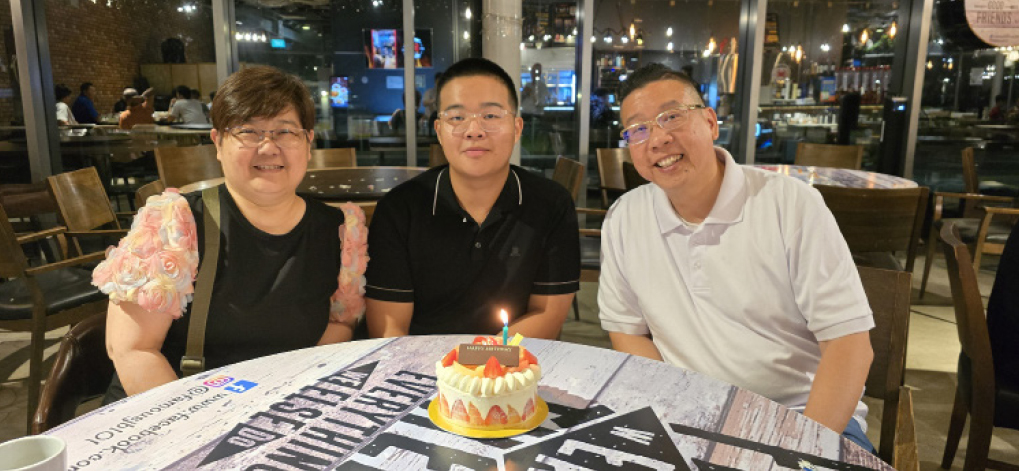
To our greatest joy, on the very day we completed our targeted amount of daimoku, my wife discovered she was pregnant. Though the pregnancy journey was far from smooth, we based ourselves on strong prayers, and in 2006, we joyfully welcomed a baby boy into our family.
Striving in One Mind with My Mentor
Looking back, I would not be who I am today without my mentor and this wonderful organisation. I used to be a youth who lacked confidence and was overly cautious in my interactions with others. However, through my training in the Soka Gakkai and my Buddhist practice, I overcame my skepticism about people. As a result, I became more proactive and approachable in my interactions with others.
I cannot thank my mentor enough for his foresight in establishing the SGI. Without the presence of local organisations around the world, I would not have been able to practise Nichiren Buddhism while living in Canada and the US.
I also fondly remembered my mentor’s warm encouragement. There was a period after my mother’s passing when my relationship with my father became strained. During that difficult time, I frequently wrote to Sensei. Like a caring father figure, Sensei sent me books and a set of chanting beads. I felt that my mentor understood my unseen struggles and sufferings. This strengthened my determination to repay my debts of gratitude as his disciple.
As a chapter chief now, I constantly remind myself that I am shouldering the mission of kosen-rufu wherever I am on behalf of Sensei. I strive to lead my chapter in the same spirit as described by Ikeda Sensei in The New Human Revolution Volume 26, “Bold Advance” chapter:
“Based on the principle of the oneness of life and its environment, for chapter leaders, the chapter is like your own shadow. A leader’s life force pulses throughout and is reflected in the organisation. In other words, if a leader’s life is filled with joy and pulses with courage, naturally all the members in the chapter will be energised and activities will be lively. But if the leader is lacking joy and enthusiasm, if their life force is weak, it will have a knock-on effect, causing members to lose their sense of joy and motivation.”
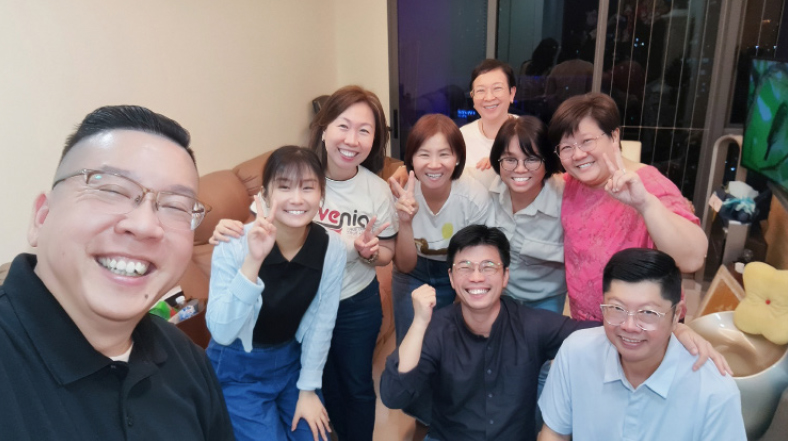
I make it a point to put in consistent and determined efforts, whether or not anyone is watching. I chant abundant daimoku for the growth and happiness of the members in my chapter and maintain a strong seeking spirit by continually learning from my mentor’s writings. It brings me great joy to see how our chapter’s inner resolve is reflected in our unity and the steady growth of all members, including the Men Division (MD). Recently, we held an inspiring MD discussion meeting, where all the members gathered in high spirits, sharing their experiences to encourage each other.
At the same time, I actively engage the youth by sharing my experiences and encouraging them to return to the Gosho and Sensei’s guidance. All four divisions strive to inspire the youth to lead lives of value creation, especially by contributing meaningfully to discussion meetings.
Coming Full Circle
Before the Covid-19 outbreak, I had been working as an administrative manager in a primary school for 12 years. Wanting to challenge myself further, I decided to make a career switch. Never did I imagine I would end up job hopping over the next five years. I worked in the public sector, at universities, and even as a valet driver at a hotel.
During this period, I had to confront many of my own weaknesses. Regardless of the job, I always put in my best effort and chanted to fulfil my unique mission.
In April, I received a job offer from a non-profit organisation to serve as a programme assistant in charge of hosting a group of American high school students visiting Singapore for a three-week immersion programme. My role was originally to support the main coordinator in taking care of the students. However, in a sudden twist of events, the main coordinator was reassigned, and I had to lead the entire team on my own.
I chanted for the wisdom and courage to manage and lead the team of 20 students. The programme turned out to be a great success! My supervisor was very pleased with the outcome and even told me that she would recommend me for a permanent position.
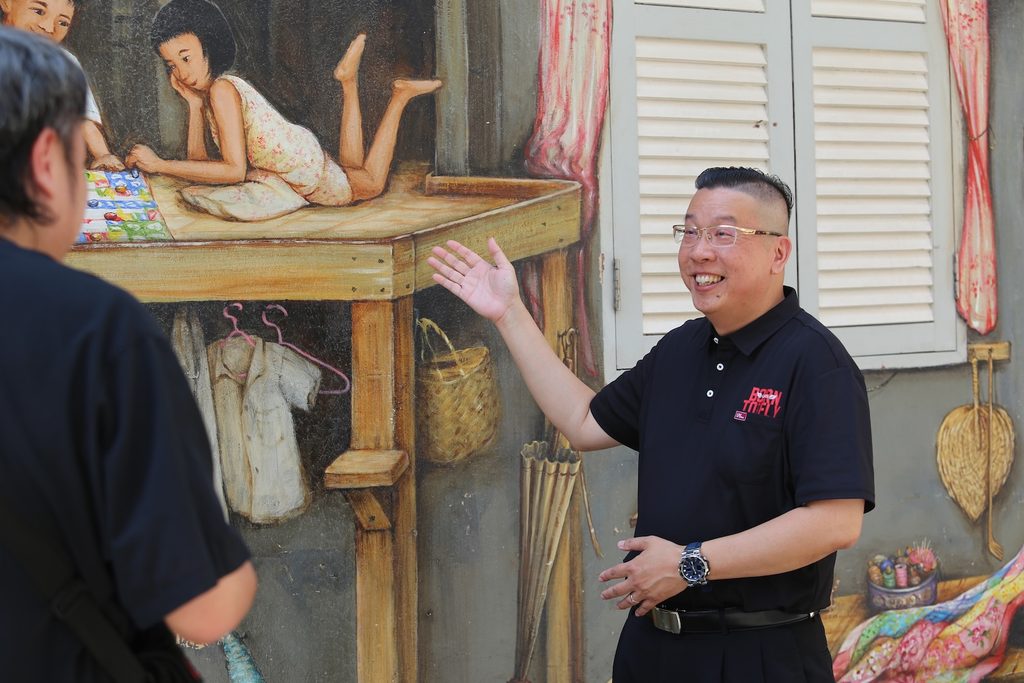
I feel that I have truly come full circle. Though I returned from the US more than three decades ago, I am still able to build meaningful connections with people across the globe and, more importantly, youths who will shape our future. I have come to realise that all the challenges and my training in the Soka Gakkai have prepared me to fulfil my mission at work today. My exchanges with the high school students left me revitalised. Knowing that I was able to encourage them by sharing with them messages of hope and courage during their stay here made my work especially meaningful.
Ikeda Sensei said, “Becoming a global citizen begins nowhere else but within one’s family, workplace, and community. Let us confirm once again that it is our sure and steady efforts in these areas that form the first steps towards any lasting reform. Wherever we find ourselves at the present moment, that is the place to rise into action, burning with commitment, passion, and hope. When we ourselves move forward with new vitality as if totally rejuvenated, our local organisations and communities will likewise begin to achieve fresh and dynamic growth.”
I am determined to always move forward with this spirit, constantly pondering “What would Sensei do if he were in my shoes?” and continue to take action as a disciple of Ikeda Sensei!
(Adapted from Creative Times, August 2025 issue)